
The Making of High-Speed Flight
Jonathan Livingston SeagullThis thread traces the technical problem-solving behind Jonathan’s dangerous dive experiments and controlled speed.
increasing Bearing strength in each event
 decreasing
Bearing strength in each eventdecreasingThe First Dive
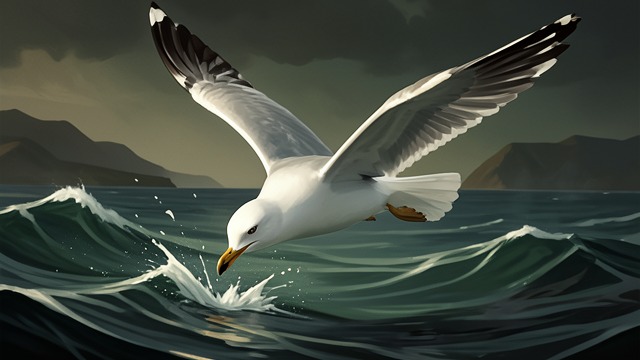
A Dangerous Question
Testing the Limit
Jonathan dives from high above the sea and discovers that a gull’s wing becomes unstable at roughly seventy miles per hour.
Evidence in Failure
Each uncontrolled fall makes the physical danger clear, but also gives him a more precise problem to solve.
The Repeated Stall
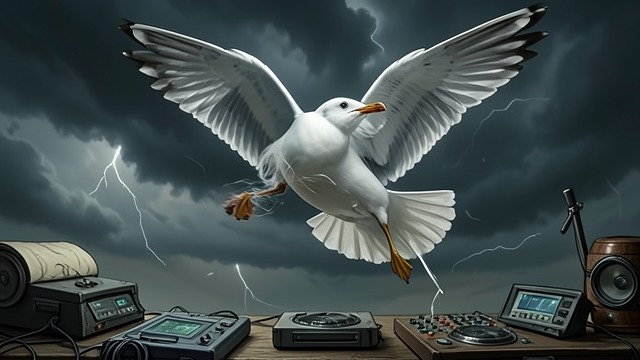
A Pattern Emerges
Unstable Wings
At high speed, Jonathan’s left wing stalls during an upstroke, triggering violent rolls and tumbling spins.
Cost of Repetition
Ten attempts end in crashes. His persistence is neither easy nor safe; the experiments press the boundary between discovery and serious injury.
Wings Held Still
A Better Hypothesis
Changing One Variable
Jonathan concludes that he must stop flapping at high speed, climbing to speed first and then keeping his wings steady.
A Record Set
The revised method carries him to ninety miles per hour. Yet the pullout still destroys control, showing that acceleration and recovery are separate problems.
Short-Wing Configuration
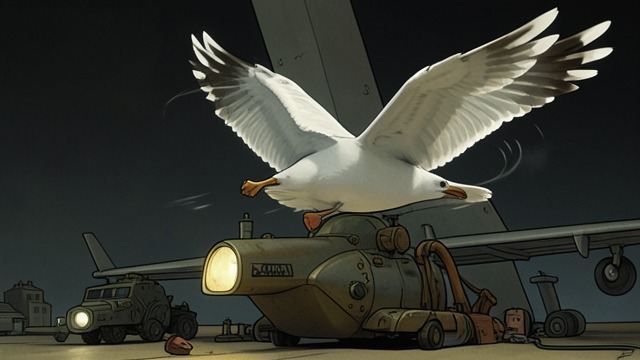
A New Wing Shape
Borrowing an Idea
A thought about falcons’ short wings suggests that Jonathan could draw in most of his wings and expose only the tips.
Safer Control
He reaches far higher speeds and eases out of the dive with a slight movement of the wingtips, solving the problem that defeated his earlier design.
Learning the Turn
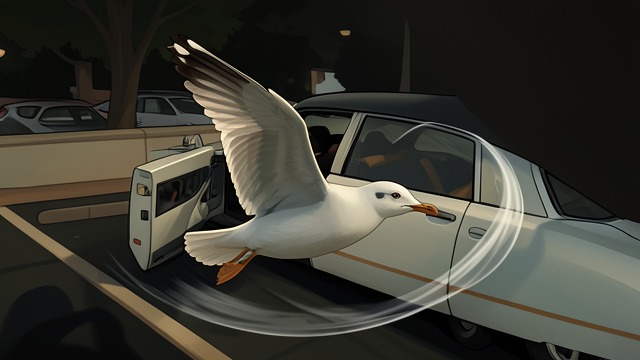
Fine Control
A Fraction of Movement
Jonathan finds that one wingtip feather can guide a smooth curve at extreme speed; moving too many feathers sends him spinning.
New Aerobatics
He turns speed into controlled maneuvers, establishing a fresh area of exploration rather than stopping at a record.
during Jonathan’s first week of speed practice
after several failed dives
after the tenth failed dive
during the night following his record
the morning after the breakthrough
